
Transdiciplinary Research
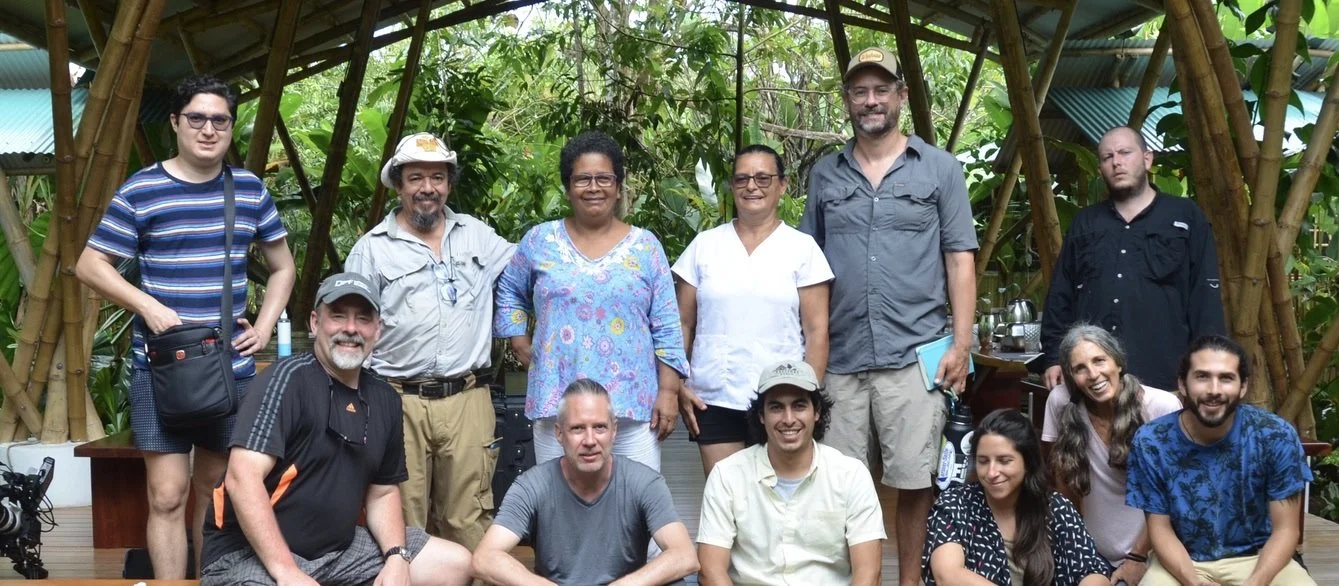
Our research advances bioregional regeneration through participatory action research and Indigenous-led partnerships at the intersection of science, governance, and practice. With a focus on coastal and marine systems—from seagrass meadow restoration to watershed stewardship—we integrate systems thinking, traditional ecological knowledge, and justice-centered evaluation to strengthen adaptive governance, climate resilience, and long-term stewardship at the scale of a bioregion.
Sharing & Exchanging Insights
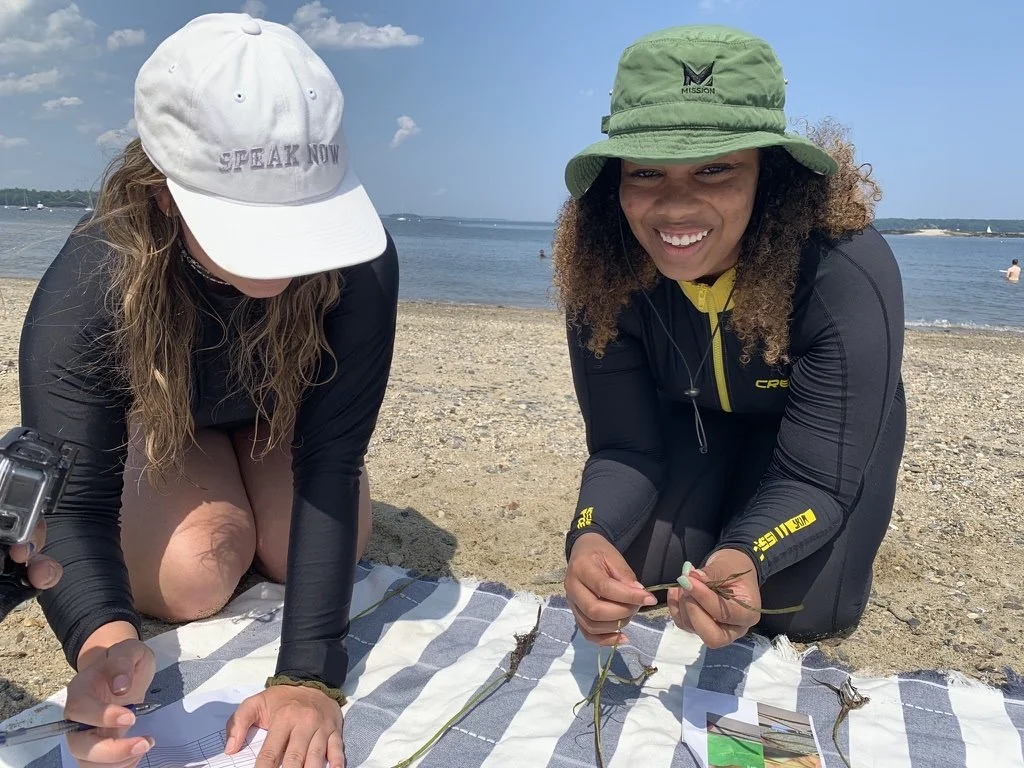
We share insights from our work through conferences, symposia, and gatherings around the world to engage in collective learning. We intentionally seek out diverse venues and communities of practice that challenge our assumptions, expand our worldviews, and deepen our understanding of complex social–ecological systems. This includes participating in gatherings such as the Transformations Community Conference, the International Sustainability Transitions, the Ecosystem Stewardship Conference, and the U.S. National Science Foundation Conference Series.
Featured Publications
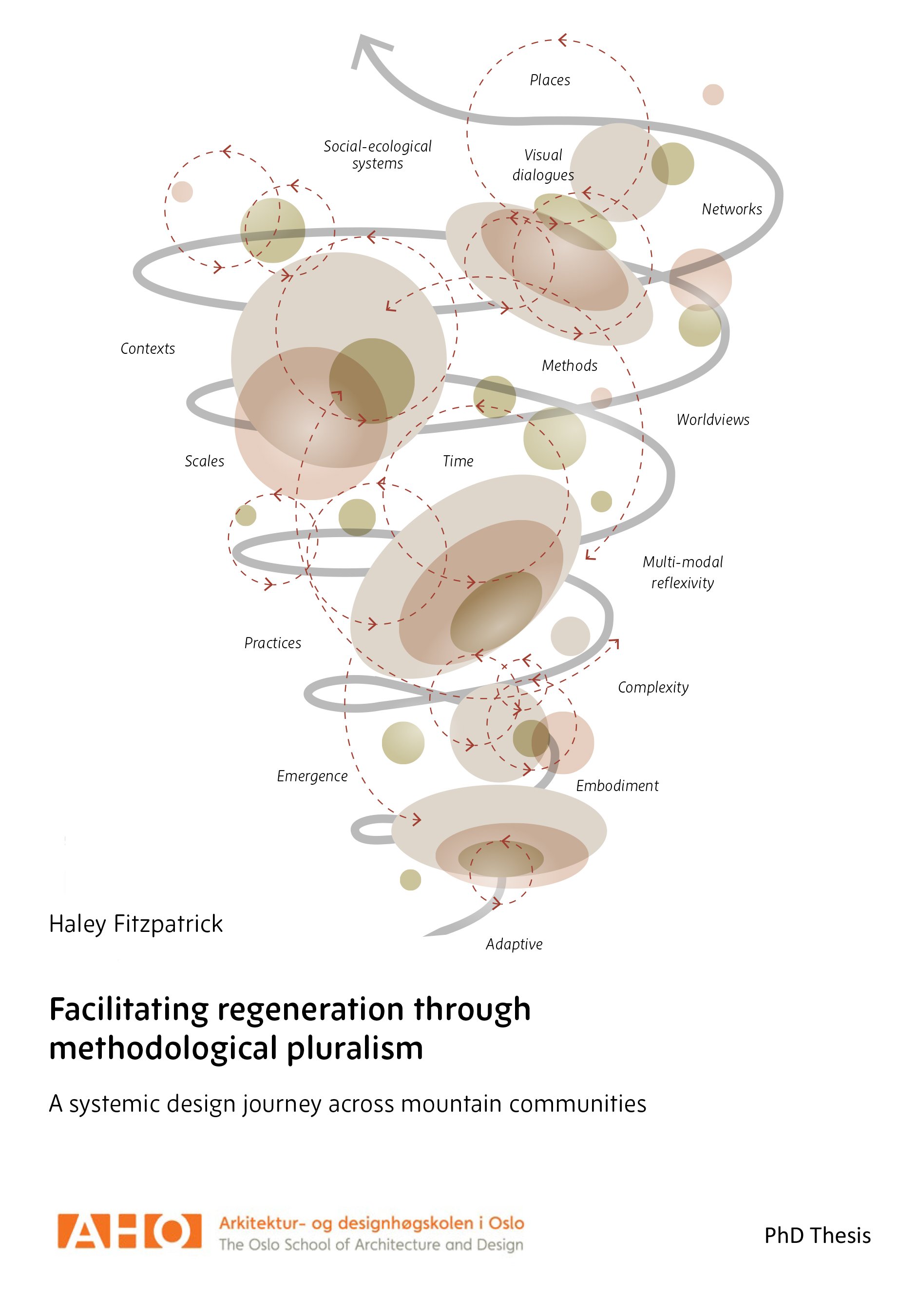
Facilitating regeneration through methodological pluralism. A systemic design journey across mountain communities. (2025).
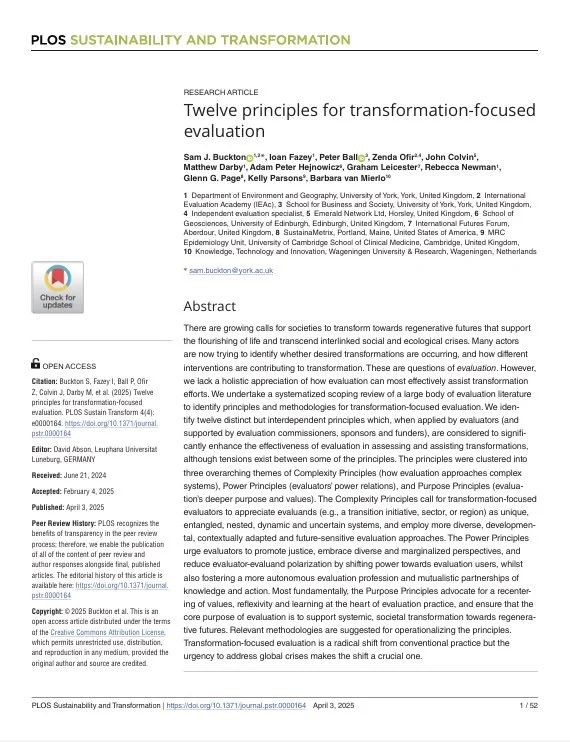
Twelve principles for transformation-focused evaluation. (2025).
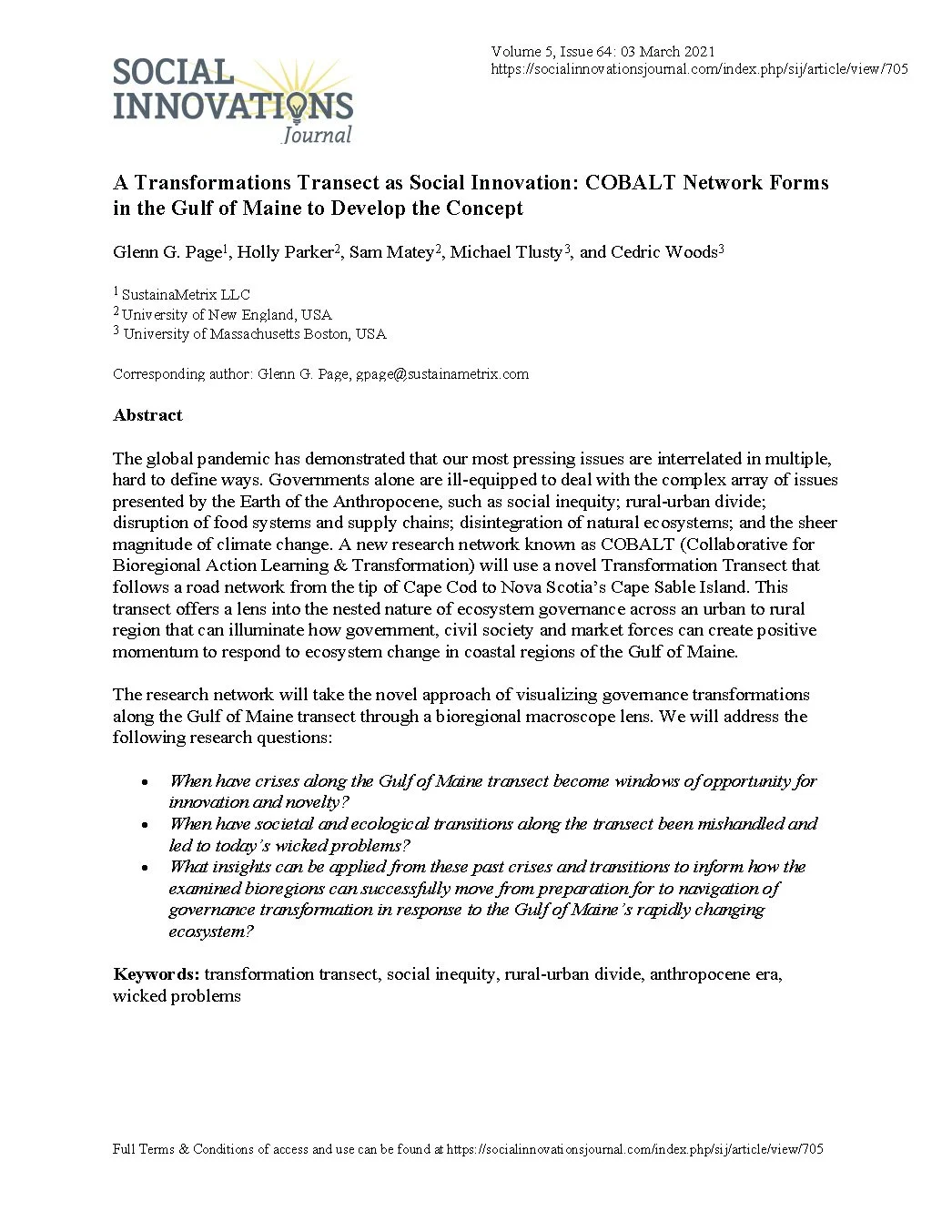
A Transformations Transect as Social Innovation: COBALT Network Forms in the Gulf of Maine to Develop the Concept. (2021).
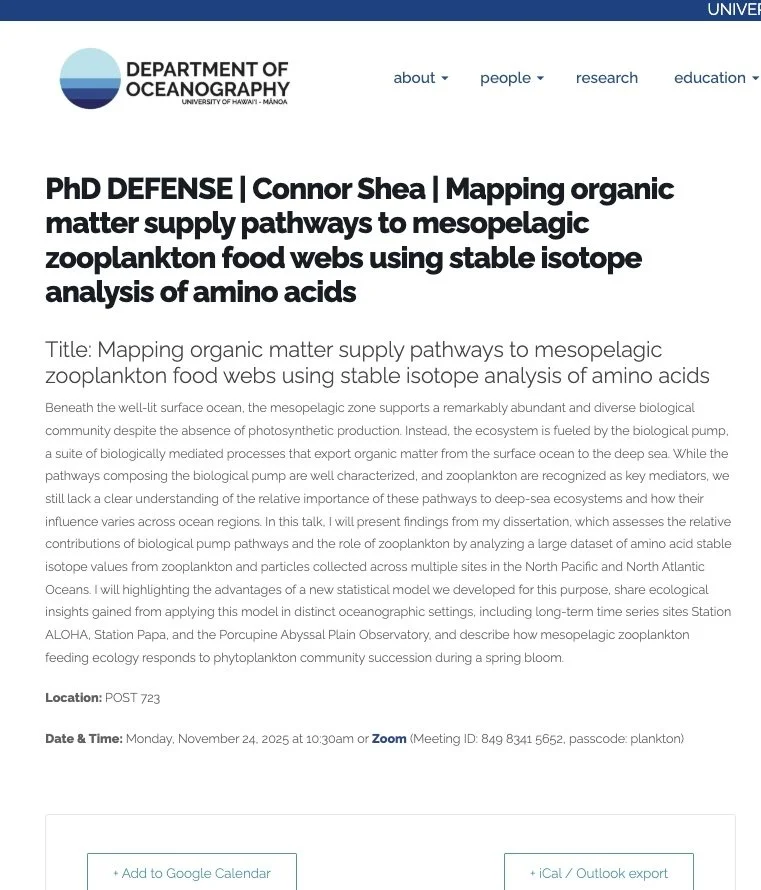
Mapping organic matter supply pathways to mesopelagic zooplankton food webs using stable isotope analysis of amino acids. (2025).
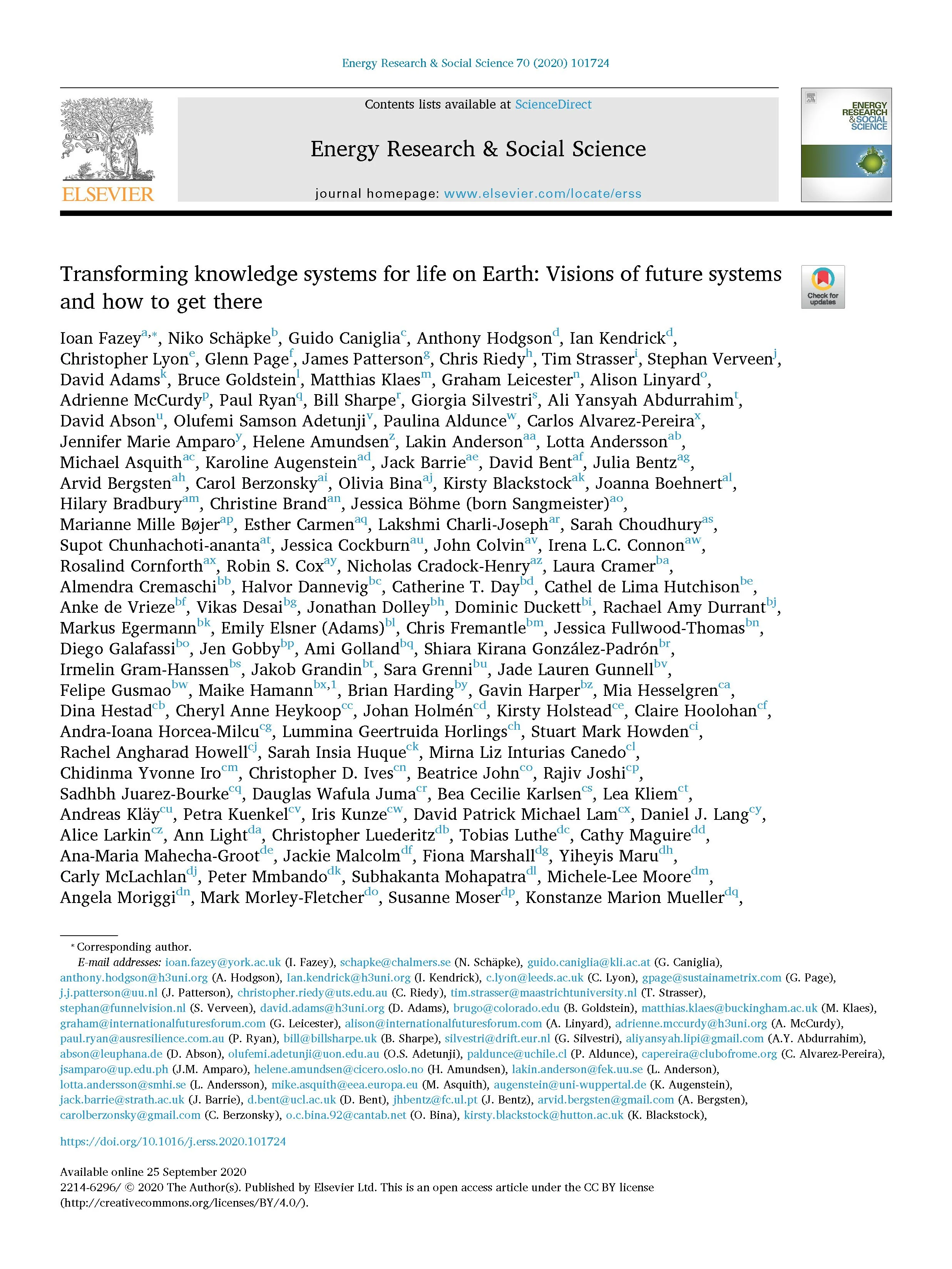
Transforming knowledge systems for life on Earth: Visions of future systems and how to get there. (2020).
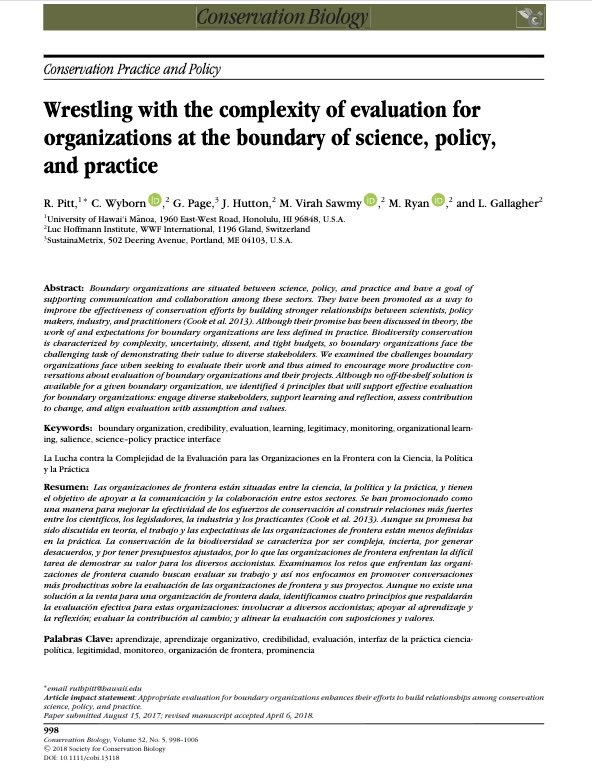
Wrestling with the complexity of evaluation for organisations at the boundary of science, policy and practice. (2018).
Ethics of evaluation for socio-ecological transformation: A case-based critical systems analysis of motivation, power, expertise, and legitimacy. (2023).
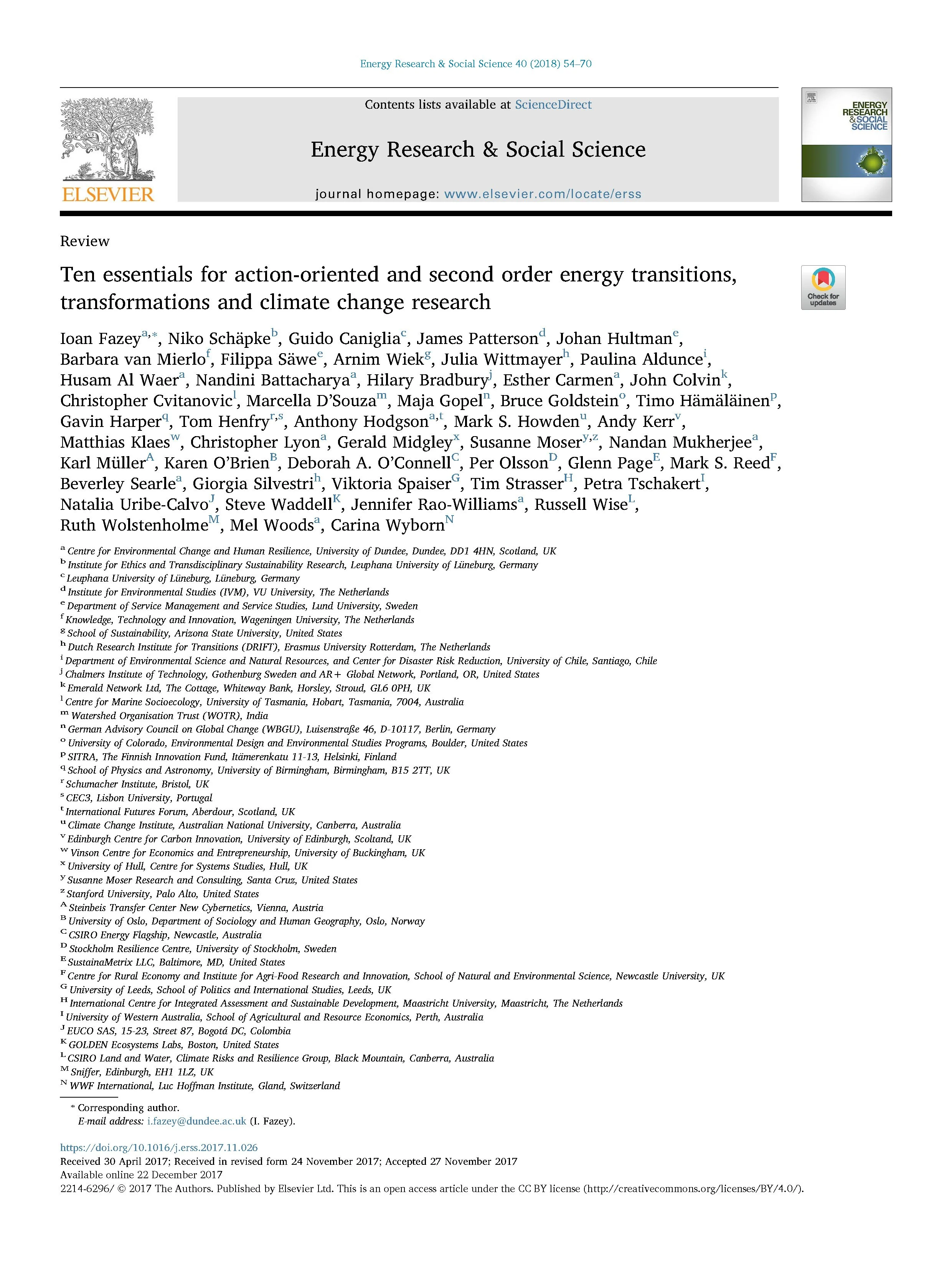
Ten essentials for action-oriented and second order energy transitions, transformations and climate change research. (2018).
-
Page, G., Matey, S., Johnston, Y., Schulte, M., Hayden, L., & Knag, S. (2022). Bioregional learning journey launches seagrass conservation in Gulf of Maine: A case study of governance response to ecosystem change. Social Innovations Journal, 15(5).
Gates, E. F., Page, G., Crespo, J. M., Oporto, M. N., & Bohórquez, J. (2022). Ethics of evaluation for socio-ecological transformation: A case-based critical systems analysis of motivation, power, expertise, and legitimacy. Evaluation.
Page, G. G., Parker, H., Matey, S., Tlusty, M., & Woods, C. (2021). A transformations transect as social innovation: COBALT network forms in the Gulf of Maine to develop the concept. Social Innovations Journal, 5(64).
Fazey, I., Schäpke, N., Caniglia, G., Hodgson, A., Kendrick, I., Lyon, C., Page, G. G., et al. (2020). Transforming knowledge systems for life on Earth: Visions of future systems and how to get there. Energy Research & Social Science, 70.
Page, G. G., & Islam, S. (2020). Evaluation of an interdisciplinary graduate program: Lessons learned from the Tufts Water Diplomacy program. In S. Islam & K. M. Smith (Eds.), Interdisciplinary collaboration for water diplomacy. Routledge.
Pitt, R., Wyborn, C., Page, G., Hutton, J., Virah-Sawmy, M., Ryan, M., & Gallagher, L. (2018). Wrestling with the complexity of evaluation for organisations at the boundary of science, policy and practice. Conservation Biology.
Lange, M., Page, G. G., & Cummins, V. (2018). Governance challenges of marine renewable development. Marine Policy. https://doi.org/10.1016/j.marpol.2018.01.008
Fazey, I., Schäpke, N., Caniglia, G., Patterson, J., Hultman, J., van Mierlo, B., Säwe, F., Wiek, A., Wittmayer, J., Aldunce, P., Al Waer, H., Battacharya, N., Bradbury, H., Carmen, E., Colvin, J., Cvitanovic, C., D’Souza, M., Gopel, M., Goldstein, B., … Wyborn, C. (2018). Ten essentials for action-oriented and second order energy transitions, transformations and climate change research. Energy Research & Social Science, 40, 54–70.
Wang, J., Gobbert, M. K., Zhang, Z., Gangopadhyay, A., & Page, G. G. (2017). Multidisciplinary education on Big Data + HPC + atmospheric sciences. In Proceedings of EduHPC-17 (Supercomputing Conference).
Page, G. G., Wise, R. M., Lindenfeld, L., Moug, P., Hodgson, A., Wyborn, C., & Fazey, I. (2016). Co-designing transformation research: Lessons learned from research on deliberate practices for transformation. Current Opinion in Environmental Sustainability, 20, 86–92.
Page, G. G. (2016). Cultivating trans-Atlantic ocean foods entrepreneurship through international scientific and educational cooperation. In Proceedings of the 2016 Arctic Circle Conference.
Page, G. G. (2014). An analysis of issues affecting the management of coral reefs and the associated capacity building needs across U.S. coral jurisdictions. SustainaMetrix.
Page, G. G. (2013). Hεn Mpoano; Our coast, our future: Building capacity for adapting to a rapidly changing coastal zone: Lessons learned. USAID Cooperative Agreement with the University of Rhode Island Coastal Resources Center.
Page, G. G., Nemerson, D., & Olsen, S. B. (2013). An analysis of issues affecting the management of coral reefs and the associated capacity building needs in Hawaii. SustainaMetrix.
Costa-Pierce, B. A., & Page, G. G. (2012). Sustainability science in aquaculture. In R. A. Meyers (Ed.), Encyclopedia of sustainability science and technology (pp. 564–581). Springer.
Olsen, S. B., & Page, G. G. (2012). Lessons emerging from applications of the LOICZ handbook “The analysis of governance responses of ecosystem change.” Land–Ocean Interactions in the Coastal Zone, Issue 2.
August, P. V., Swift, J. M., Kellogg, D. Q., Page, G., Nelson, P., Opaluch, J., Cobb, J. S., Foster, C., & Gold, A. J. (2010). T competency: A simple metric for assessing multidisciplinary graduate education. Journal of Natural Resources and Life Sciences Education, 39, 15–21.
Olsen, S. B., Page, G. G., & Ochoa, E. (2009). The analysis of governance response to ecosystem change: A handbook for assessing a baseline (LOICZ Reports & Studies No. 34). GKSS Research Center.
Ashley, A. L., Nemerson, D., & Page, G. (2004). Using community-based and science-based methods to improve tidal marsh restoration in the Chesapeake Bay. In Proceedings of the First National Conference on Ecosystem Restoration.
Page, G. G., Gomezjurado, J., & Ashley, A. (2004). Ecological aquaculture: A new paradigm for conservation action. In Proceedings of the 6th International Aquarium Congress.
Nemerson, D., & Page, G. (2003). Multi-agency collaboration to restore Chesapeake Bay tidal marshes. In Proceedings of the Inaugural National Conference on Coastal and Estuarine Habitat Restoration. Restore America’s Estuaries.
Schofield, D., Page, G., Lawrence, A., Nemerson, D., & Broberg, M. (2003). Fostering minority student participation in applied conservation. In Proceedings of the 13th Biennial Coastal Zone Conference.
Page, G. (2002). The National Aquarium’s commitment to the Chesapeake: A model for wetland stewardship. In Stakeholder Forum on Federal Wetlands Mitigation: Forum Report (pp. 22–24).
Page, G. G. (2002). When aquariums think outside the tank. National Wetlands Newsletter, 24(2), 5–6, 12–13.
Lawrence, A. L., Page, G. G., & Ashley, J. T. F. (2001). The National Aquarium in Baltimore’s restoration of created tidal wetlands in the Chesapeake Bay. In Proceedings of the 16th Annual Estuarine Research Federation Conference.
Lawrence, A. L., & Page, G. G. (2001). The National Aquarium in Baltimore’s commitment to the Chesapeake: Community-based wetland restoration. In Isaac Walton League Communities Working for Wetlands Conference Proceedings.
Page, G. G., Lawrence, A. L., Aadland, C., & Marshall, L. (2001). The National Aquarium in Baltimore and Morgan State University’s environmental internship program. In Proceedings of the Society of Environmental Toxicology and Chemistry Annual Meeting.
Page, G., & Davis, R. (2001). Community-based program restores eelgrass habitat in the Chesapeake Bay system (Virginia). Ecological Restoration, 19(3), 178–179.
Page, G. G. (1999). Building community-based restoration programs at the National Aquarium in Baltimore. Society of Wetland Scientists Bulletin, 16(2), 103.
Page, G. G. (1999). The National Aquarium in Baltimore’s role as a coastal ecosystem learning center. In Coastal Zone ’99 Proceedings (pp. 585–586).
Page, G. G., & Sabo, M. J. (1997). Volunteer water quality monitoring to aid restoration of submerged aquatic vegetation in the Chesapeake Bay. In Proceedings of the 14th Biennial Estuarine Research Federation International Conference (p. 138).
Page, G. G., Dussia, J., & Stringer, M. (1997). Chesapeake Bay ecosystem handbook: A guide for natural resource managers. Alliance for the Chesapeake Bay.
Page, G. G. (1995). Citizen involvement in habitat restoration: A case study. In Coastal Zone ’95 Proceedings. Texas A&M University.
Page, G. (1995). Monitoring submerged aquatic vegetation: A methodology to encourage public participation. In National Estuary Program Technology Transfer Conference Proceedings.
Page, G. (1995). Citizen monitoring of SAV habitat requirements. In EPA Shallow Water Conference Proceedings.
Page, G. G. (1991). Coastal dunes built and vegetated to enhance and protect Ocean City shoreline (Maryland). Restoration & Management Notes, 9(2).
Page, G. (1986). Coastal exchange provides insight into past, present, and future. Coastal Review, 4(1).